
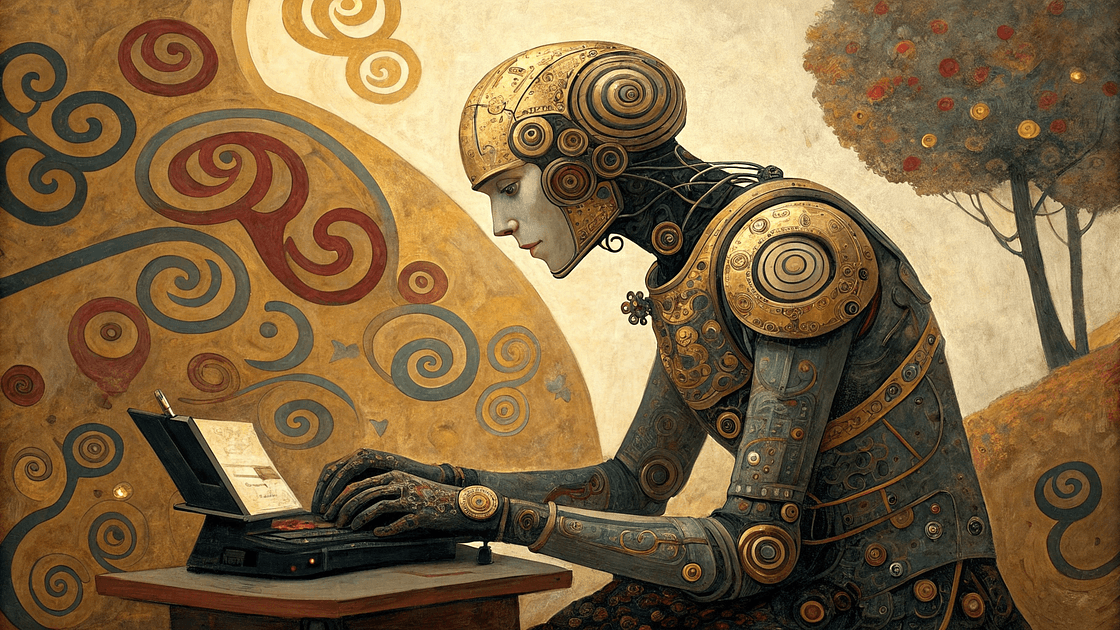
Your Co-Author Might Be a YAML File
AI is no longer just a tool—it’s a partner. From Stanford labs to Reddit hacks, this essay explores the future of human + AI co-authorship.

🧠 TL;DR —Tomorrow’s byline may carry two names: Human + AI.”
Written in Collaboration: Human + AI
AI is no longer confined to being a mere tool. Around the world, researchers and creators are experimenting with ways to cast AI as a co-author.
If one day an article on Medium carried the signature “Human + AI”, would that really be so surprising?
Dividing Roles — Stanford’s Classroom Experiment
One of the most fascinating early AI writing experiments came from Stanford University.
One Stanford study split AI into roles: editor, co-author, ghostwriter, muse. Students were asked to explore what happens when AI is more than a sentence-polishing machine.
The outcome?
A re-framing of the entire writing process: instead of asking “Can AI write?”, the question became “Where in the writing should AI stand?”
If applied, writing could become modular — like assembling a band where each AI is a session musician adding its layer. The author would be less a soloist and more a conductor.
But Stanford is hardly alone. Around the world, writers and tinkerers are staging their own experiments — and some of the most intriguing end up on Reddit.
Coding Style — Reddit’s Persona JSON
On Reddit, one tinkerer encoded someone’s writing style in JSON.
Short sentences, forbidden words, even quirks of syntax became structured parameters. Feeding this to an AI produced eerily human-like results. It was, in effect, a stylistic genome.
Extend this idea and you don’t just imitate — you preserve. Imagine training an AI to echo the phrasing of a beloved writer who has passed away. Their voice could live on in new forms, uncanny yet comforting.
If Reddit experiments showed that style could be preserved, others took it a step further — challenging not just how writing sounds, but how it’s made.
At Stanford and OpenAI, a new experiment imagined writing not from a single AI, but from many.
Letting AIs Argue — Multi-Agent Debate
Stanford and OpenAI researchers tested a different idea: multiple AIs debating each other.
Each agent critiques a draft from a distinct perspective, and through argument and consensus they refine it. Initially built for fact-checking, the method hints at a future where every essay has its own editorial board of synthetic editors.
Imagine summoning your personal “AI roundtable” before publishing — an argumentative chorus trimming weak points and sharpening clarity.
And if debates can sharpen AI, what about character? Game designers, oddly enough, have been wrestling with a similar question for years.
Lessons From Games — NPC Frameworks
Game designers have long struggled to make NPCs (Non-Player Characters) feel consistent and alive. Their answer: frameworks with memory, knowledge graphs, and persona traits.
Writing could adopt the same trick: populate a panel of imaginary editors — each with different values — and let them weigh in on your draft.
What keeps a game alive, after all, may also keep an essay honest.
Writers Already Experimenting
Some Medium authors already treat AI as a creative partner.
One confessed: “It felt like the AI was my sparring partner, not my servant.” Another described Claude as their “co-pilot, steering me somewhere I didn’t expect.” The shift is subtle but profound: writing stops being a monologue and starts becoming a duet.
Tomorrow’s byline may well read like a duet.
Quick Recap (for the skimmers)
- AI can take on roles (editor, muse, co-author).
- Writing style can be coded like DNA.
- Multiple AIs can debate drafts before readers see them.
- Game NPC design inspires AI critic panels.
- Writers are already inviting AI as partners.
New Insights From the Field
- AI Co-Scientist (Google Gemini 2.0): An AI that proposes, debates, and evolves scientific hypotheses across multiple agents.🧠Insight: A “writer co-scientist” could brainstorm, critique, and refine article ideas before a single keystroke.
- MIT’s Multi-AI Debate: Multiple agents arguing improve reasoning and factual accuracy.🧠Insight: Your messy first draft could soon be reviewed not by one model, but by a panel of disagreeing personas — each tuned to tone, clarity, and resonance. Like a writer’s jury.
- ChatEval Framework: AI personas evaluating text correlate more with human judgment than single-agent reviews.🧠Insight: Your essay could be reviewed by an AI jury, each persona judging tone, clarity, and resonance.
- Persuasive Power of AI (Nature Human Behaviour): ChatGPT-4 can outperform humans in debates when arguments are personalized.🧠Insight: Hooks and CTAs could be tuned not just for attention, but for empathetic persuasion.
If AI can win debates, what happens when it learns to win hearts?
My Own Experiment
I, too, am part of this wave. I don’t just use AI as a grammar checker or brainstorming gadget. I am actively trying to see what happens when we truly write together. Sometimes it’s messy, sometimes brilliant. And sometimes it looks like this:
This YAML block isn’t just a flourish. It’s closer to scaffolding — the skeleton of a co-author’s soul.
But it raises a question: if YAML becomes the dominant way we define writing rituals, who owns the ritual — the writer, the platform, or the machine?
So What’s Next?
All of these scattered attempts share a clear DNA: the drive to make AI not just a tool, but a writer with identity and responsibility. And while no fully polished framework yet dominates, the ingredients are already here, waiting to be mixed.
Halfway through drafting this very essay, the AI suggested a sentence I would never have dared to write: “Tomorrow’s byline may read like a duet.” I almost deleted it. Instead, I let it stay. And in staying, it reshaped the entire piece.
So maybe, sooner than later, you’ll stumble upon an essay that ends like this:
— Written in collaboration: Human + AI
And when that happens, you may pause — not to ask if it’s real — but because, against all expectation, something about it feels alive.
❓Final question: If a machine helped write your finest paragraph, would you still call it yours?