
Flamehaven frameworks
Methods, systems, and review engines behind the work.
Frameworks is the methods layer for Flamehaven. It maps the systems used to review AI risk, verify reasoning, inspect scientific trust surfaces, and package technical evidence. Case Notes is the proof layer beneath it.
Control, auditability, and safe boundaries
AI Governance Systems
This track focuses on the layers that make AI behavior inspectable before it reaches production: policy boundaries, fail-closed gates, and governance logic that can survive legal, operational, or safety review.
Representative Review Visual
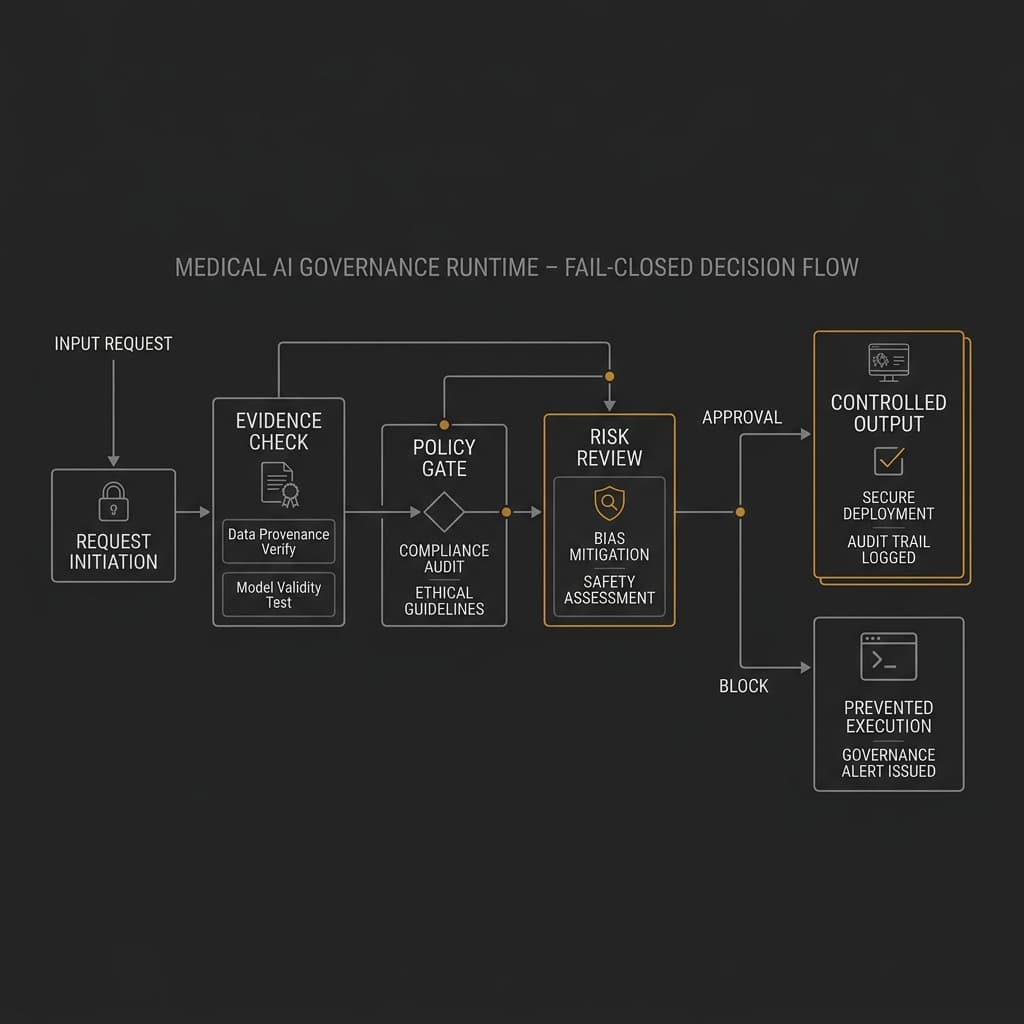
The goal is not to add superficial compliance language after a model is already wired into your workflow. The goal is to define where the system may act, when it must stop, and what evidence exists for those decisions.
Flamehaven uses governance as a systems problem: constraints, audit trails, review surfaces, and runtime behavior should align. If they do not, the architecture is still fragile even if the demo looks polished.
Related Case Notes
CCGE: Fail-Closed Governance Engine
Fail-closed governance engine for healthcare AI systems, ensuring deterministic boundaries around probabilistic models.
AI-SLOP-Detector
A long-running code review and anti-slop inspection system designed to surface low-integrity patterns before they harden into production debt.
Flamehaven-Tensor-Canon
Universal Data Governance Engine ∴ Enforcing structural covenants and detecting drift (MMD) for PyTorch & NumPy pipelines.
Related Writing
Short writing list focused on governance, safety, and architectural control.
When Control Becomes Authority: Calibration Governance in STEM BIO-AI 1.7.x
Why STEM BIO-AI treats calibration as governed policy instead of a free-form score-tuning console for bio and medical AI repository audits.
Building a Deterministic Governance Kernel: Separating Custody from Truth
CGF separates domain truth from custody mechanics, turning AI governance from Markdown/YAML policy language into deterministic, inspectable artifacts.
Role Separation Is Not Verification: The Structural Failures Hidden in Your Multi-Agent Pipeline
A research-backed breakdown of why agent role design alone does not produce reliable audits — and what actually does
Discuss this framework
If your system maps to this risk surface, start with a direct review. Flamehaven translates these methods into concrete findings, verdicts, and next-step recommendations.
Inference quality, validation, and proof surfaces
Reasoning / Verification Engines
This track covers systems that inspect claims, reasoning steps, and structural integrity. The emphasis is not “can the model answer” but “can the system justify, verify, and reject weak output.”
Representative Review Visual
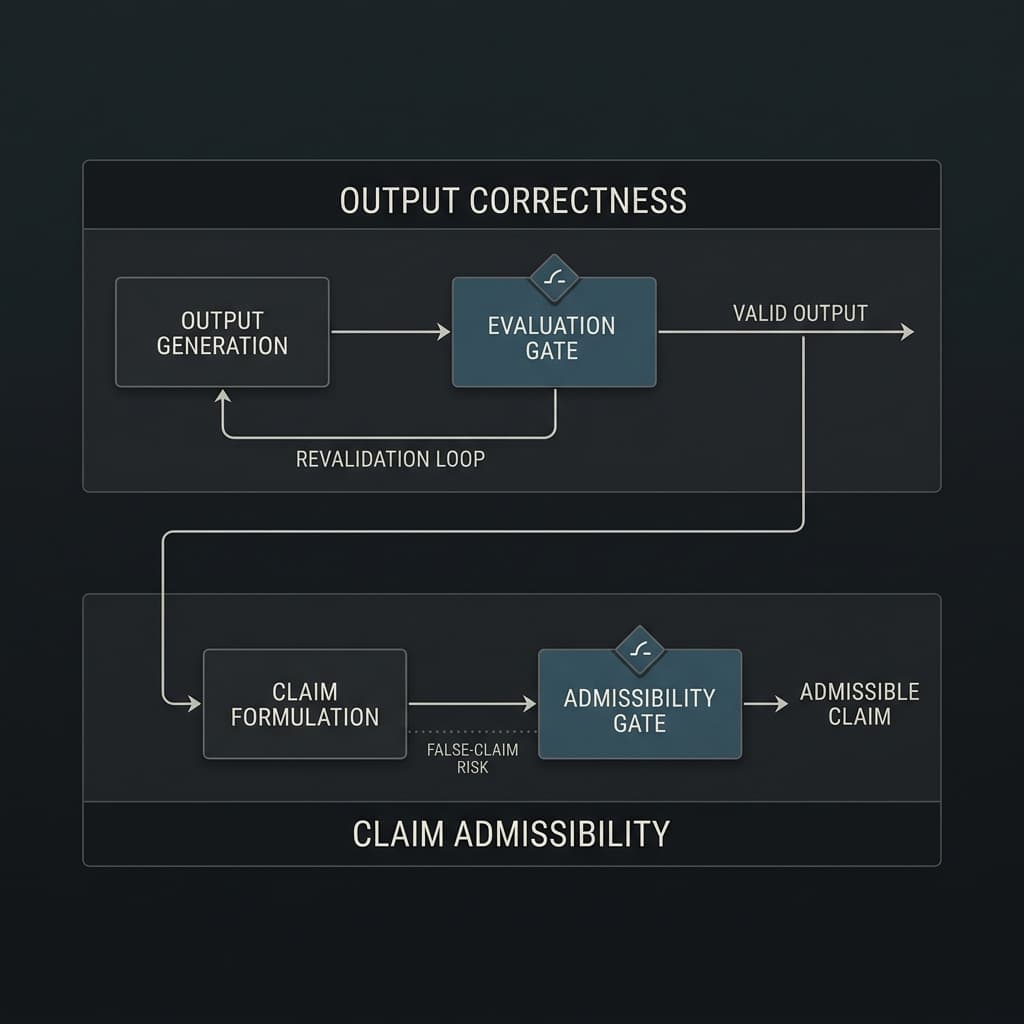
Reasoning infrastructure matters when downstream decisions are expensive, regulated, or irreversible. In those environments, plausible output without verification is just delayed failure.
Flamehaven treats verification as part of the product architecture itself: not a QA afterthought, but a required layer that shapes which outputs are allowed to survive.
Related Case Notes
AI-SLOP-Detector
A long-running code review and anti-slop inspection system designed to surface low-integrity patterns before they harden into production debt.
SPAR-Framework
SPAR (Sovereign Physics Autonomous Review): a deterministic adversarial review layer for mathematical and physics-grade model validation.
ProofCore-AI-Benchmark
ProofCore is a browser-native, 100% offline-first, hybrid mathematical proof verification engine. It combines rigorous symbolic math with semantic understanding to reliably verify mathematical proofs, offering zero ex...
HRPO-X
Hybrid Reasoning Policy Optimization (HRPO): a research prototype for hybrid latent reasoning with RL.
Related Writing
Posts linked to reasoning quality, verification, proof, and evaluation.
Each /slop Is a Calibration Signal — AI-SLOP Detector v3.6.0 and the Claude Code Skill
Every /slop invocation records to a project-scoped history. After 10 re-scanned files, bounded self-calibration adjusts detection weights for your codebase. Here is the mechanism, the data, and what actually shipped in v3.6.0.
AI-SLOP Detector v3.5.0 — Every Claim, Verified Against Source Code
AI-SLOP Detector v3.5.0 made 7 claims on LinkedIn —self-calibration logic, download numbers, defect detection. Here's every claim verified against actual file paths and line numbers. The code speaks for itself.
Can AI Review Physics? Yes — That Is Why We Built SPAR
SPAR is a deterministic framework for claim-aware review: checking whether an output deserves the claim attached to it.
Discuss this framework
If your system maps to this risk surface, start with a direct review. Flamehaven translates these methods into concrete findings, verdicts, and next-step recommendations.
Evidence-aware scientific systems
Scientific & BioAI Infrastructure
This track is for scientific and BioAI environments where reproducibility, validation boundaries, and explicit methodological structure matter more than generic model enthusiasm.
Representative Review Visual
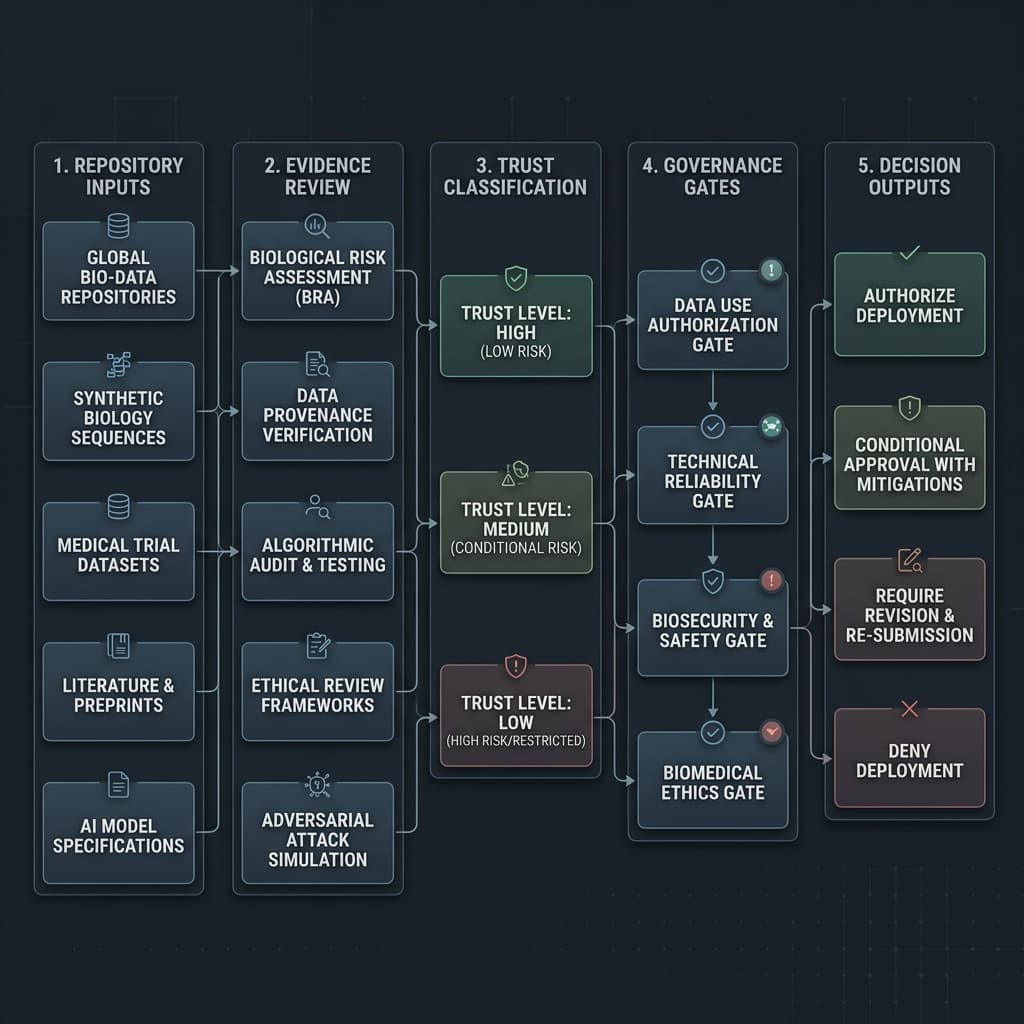
Scientific systems need more than automation. They need traceable assumptions, screened hypotheses, and outputs that can be inspected by technical stakeholders without hand-waving.
Flamehaven approaches BioAI and scientific infrastructure as high-stakes engineering: evidence pathways, reviewable artifacts, and architectures that stay useful when the domain becomes more demanding.
Related Case Notes
RExSyn-Nexus
A governance-aware orchestration framework for AI systems that need structured reasoning, explicit controls, and traceable decision paths.
Flamehaven-TOE
A research-side validation engine for structured hypothesis extraction, experimental framing, and multi-step reasoning review.
ARR-medic-cyp3a4
Research-side CYP3A4 interaction prediction system for pharmacology education, exploratory screening, and BioAI workflow design.
Related Writing
Posts connected to scientific workflows, BioAI, and evidence-bound research systems.
Beyond Repo Scanning: How AIRI Expanded the Risk Vocabulary in STEM BIO-AI 1.7.x
How STEM BIO-AI uses the MIT AI Risk Repository as a governed local risk-vocabulary layer without replacing deterministic repository scanning
From Score to Workflow: Turning STEM BIO-AI Into a Local Audit System
Bio/medical AI trust should not collapse into one score. STEM BIO-AI v1.6.2 shows how deterministic auditing, evidence-led diagnostics, regulatory traceability, and bounded AI advisory can become an inspectable local workflow.
How Do You Trust the AI Auditor? STEM-AI v1.1.2 and Memory-Contracted Bio-AI Audits
STEM-AI v1.1.2 binds a bio/medical AI repository audit to a machine-checkable memory contract, then demonstrates it on a real open-source bioinformatics repository.
Discuss this framework
If your system maps to this risk surface, start with a direct review. Flamehaven translates these methods into concrete findings, verdicts, and next-step recommendations.
Operational surfaces that survive real deployment
Cloud & Engineering Foundations
This track covers the engineering foundations that hold everything else up: deployment surfaces, delivery tooling, developer infrastructure, and the production scaffolding that turns concept work into systems teams can operate.
A strong idea still fails if the surrounding engineering is weak. Infrastructure, automation, and delivery logic determine whether the system can be sustained after the initial build.
Flamehaven treats operational foundations as part of the same thesis: architecture should be governable, observable, and practical to evolve under real production pressure.
Related Case Notes
Flamehaven-Filesearch
Self-hosted RAG search engine for private document search, hybrid retrieval, and production deployment in minutes instead of weeks.
copilot-guardian
Autonomous CI/CD recovery tool powered by GitHub Copilot CLI. Analyzes failures with multi-hypothesis reasoning, generates risk-stratified patches (Conservative/Balanced/Aggressive), and auto-applies fixes with full t...
Dir2md
CLI pipeline that converts codebases into structured markdown context for AI-assisted engineering, review, and documentation workflows.
FlashRecord
The fastest Python-first CLI screen recorder ∴ Instant screenshots (@sc) and lightweight GIF recording (@sv) for developer automation. No GUI, just speed.
Related Writing
Posts tied to engineering practice, deployment, and production infrastructure.
The Sheepwave Has a New Shape: OpenMythos and the Rise of Architecture Hype
A technical-opinion essay on OpenMythos, Claude Mythos, README-driven AI hype, and why architecture claims need source-level verification before becoming public belief.
OpenMythos v0.5.0 Code Review - Audit Report
OpenMythos collected thousands of GitHub stars and dominated AI discourse for a week. This is what happens when you actually read the code — and why the people who do always arrive too late to matter.
FLAMEHAVEN FileSearch: Why This RAG Engine Feels Different from the Usual Stack
A technical look at FLAMEHAVEN FileSearch: BM25+RRF hybrid retrieval, chunk-addressable indexing, deterministic DSP vectors, and the trade-offs behind a lower-overhead self-hosted RAG engine.
Discuss this framework
If your system maps to this risk surface, start with a direct review. Flamehaven translates these methods into concrete findings, verdicts, and next-step recommendations.
Trend shifts, market movement, and strategic signals
AI Signals & Market Shifts
This track covers meaningful AI market movement, platform shifts, product signals, and operational changes that matter to teams building under real constraints.
The goal is not to repost headlines. The goal is to surface changes that affect architecture, risk posture, product timing, and strategic decision-making.
Flamehaven treats AI signals as decision inputs: market structure, platform behavior, and ecosystem drift all matter when systems need to hold up beyond the current cycle.
Related Case Notes
Related Writing
Posts connected to AI trend shifts, platform movement, and market-relevant signals.
Crimson Desert and the Innovation Tax
Crimson Desert and the Innovation Tax: an essay on why ambitious systems can look like a 6/10 before their grammar becomes legible — and why AI teams must know what to patch, what to preserve, and how to turn criticism into a map.
The Alchemy of Ego - How AI Turns Unfinished Thought Into Fluent Certainty
A personal essay on how AI can turn unfinished thoughts into fluent certainty, why internal coherence is not external proof, and why falsifiability, failure conditions, and visible execution matter in AI-assisted thinking.
The Centaur’s Equation: Why the Stubborn Expert Wins in the Era of Infinite AI
Why Evaluation Ownership is the Ultimate Defensive Asset in the AGI Economy
Discuss this framework
If your system maps to this risk surface, start with a direct review. Flamehaven translates these methods into concrete findings, verdicts, and next-step recommendations.